
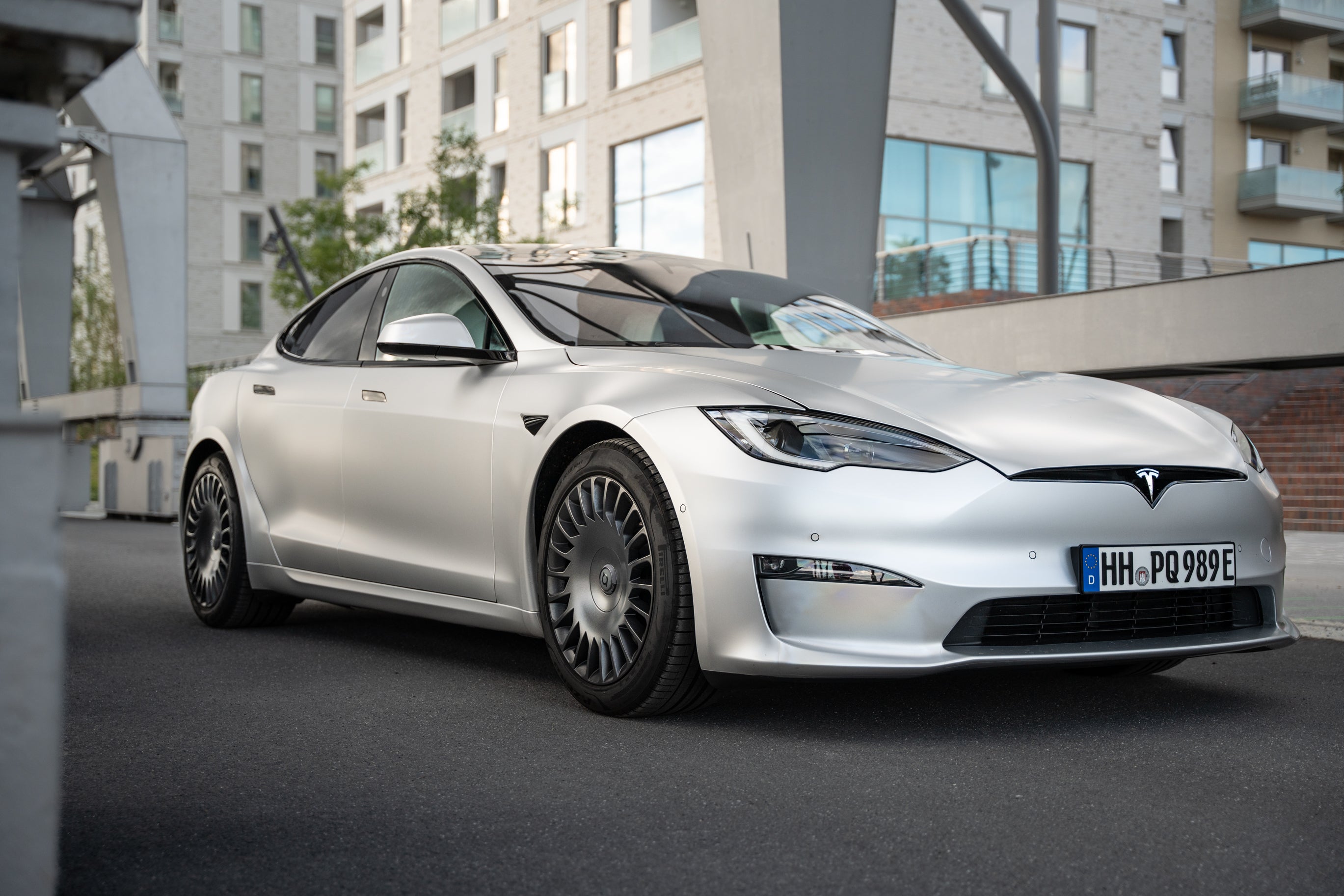



In a world increasingly focused on sustainable mobility, the charging infrastructure for electric vehicles plays a crucial role. As a pioneer in the electric vehicle industry, Tesla has made a significant contribution to promoting electromobility with its Supercharger network. Since the production start of the Tesla Model S in 2012 and later the Model X, Tesla has also been building its own fast-charging stations, called "Superchargers" by Tesla. These have become an indispensable part of the long-distance network for Tesla drivers. With over 75,000 Tesla Superchargers spread across nearly 8,000 locations worldwide, they make it possible to cover very long distances with the electric car. But what exactly are Tesla Superchargers, how do they work, and what are the differences between the various versions? In this article, we provide you with a comprehensive overview of everything you need to know about the Tesla Superchargers. From technical specifications to usage and costs. Whether you are already a Tesla owner or just want to learn more about the future of electromobility, here you'll find all the relevant information. Dive into the world of Tesla Superchargers and discover how they are revolutionizing the way we charge our vehicles. If you are still looking for Tesla Model Y accessories or Model 3 accessories, you will find them at Shop4Tesla.

What is a Tesla Supercharger?
A Tesla Supercharger is a high-speed charging network specifically developed for Tesla vehicles. Since its introduction in 2012, Tesla has continuously expanded its Supercharger network to enable Tesla owners to take long-distance trips. The Supercharger stations are strategically distributed worldwide, allowing for fast and efficient charging of Tesla vehicles.
Exclusivity for Tesla vehicles
Originally, the Supercharger network was exclusively reserved for Tesla vehicles. This exclusivity was an important advantage for Tesla owners who did not want to endure long charging times on long-distance trips. The stations are specifically tailored to the needs of Tesla vehicles and offer a charging capacity that exceeds the standard charging points for other electric vehicles.
In the early days of the Supercharger network, Tesla even offered free access to the charging stations as an incentive for purchasing its vehicles. However, this changed over time as Tesla began charging fees for using the Supercharger network and introduced various fee models.
The Supercharger network consists of different versions of charging stations, which offer different charging speeds and functions. The following sections describe these different versions and their features in more detail.
Opening for other electric vehicles
Good news for electric vehicle owners: Tesla has opened all Supercharger stations to vehicles from other brands. This means that owners of electric cars from other manufacturers can now benefit from the proven Supercharger network. This opening is an important step to encourage more drivers to switch to electromobility by providing them access to an established and widespread charging infrastructure network.
Requirements and Access
For electric vehicles from other brands to use the Superchargers, they must have a CCS charging port that supports the communication and security protocols of Tesla. Tesla closely monitors the locations to avoid bottlenecks and uses user feedback for future adjustments.
Usage and Payment
The use of Supercharger stations for other electric vehicles is done via the Tesla app (version 4.2.3 or higher). There, drivers can start a charging session, find available stations, and conveniently handle payments through the app. Alternatively, payment can be made directly at the Supercharger with a common credit card (V4) or via mobile payment services.
Membership and Benefits
Non-Tesla owners can optionally sign up for a Supercharging membership to benefit from discounted charging prices at selected locations. This membership applies to all the owner's electric vehicles and is not mandatory to use a Supercharger.
Future Development
Tesla plans the continuous expansion of the Supercharger network to meet the growing demand for charging options for electric vehicles. Opening the Supercharger stations to other electric vehicles is part of the strategy to advance electromobility worldwide and ensure efficient use of the charging infrastructure.
Types of Tesla Superchargers
Tesla has developed various versions of its Superchargers over the years to continuously improve charging capacity and speed. Here is an overview of the main versions:
V1 Supercharger
- Maximum Charging Power: Up to 120 kW
- Power Sharing: Each connector offers dedicated power
- Number of Simultaneously Charging Vehicles: 2 vehicles per charging station
Special Features: Ideal for the early days of the Tesla Supercharger network, strategically placed along highways and in metropolitan areas.
V2 Supercharger
- Maximum Charging Power: Up to 150 kW
- Power Sharing: Two connectors share a power of up to 150 kW
- Number of Simultaneously Charging Vehicles: 2 vehicles per charging station
Special Features: Expanded on major roads and highways for fast and flexible charging.

V3 Supercharger
- Maximum Charging Power: Up to 250 kW
- Power Sharing: Dynamic power adjustment depending on load
- Number of vehicles charging simultaneously: Dynamic adjustment based on load
Features: Introduced with liquid-cooled cables for improved efficiency, designed for main roads and heavily trafficked highways.

V4 Supercharger
- Maximum charging power: Up to 350 kW (future expandability to 650 kW)
- Power Sharing: Optimized system for efficient energy use
- Number of vehicles charging simultaneously: Dynamic adjustment to maximize charging capacity
Features: Planned for worldwide main roads, longer cables for improved flexibility, and support for credit card payments.

Urban Supercharger
- Maximum charging power: Up to 72 kW
- Power Sharing: Lower power output for urban environments
- Number of vehicles charging simultaneously: 1 vehicle per charging station
Features: Specifically designed for urban areas to optimize space and ensure reliable charging in parking garages and shopping centers.

Mobile Supercharger
- Deployment possibilities and capacity: Portable units for temporary installations
- Features: Flexibly deployable for temporary events or emergencies to extend the range of the Tesla charging network.
Comparison of Supercharger Versions
|
Supercharger Version |
Max Power Output |
Power Sharing |
Number of vehicles charging simultaneously |
Max Charging Speed |
|
V1 |
Up to 120 kW |
Dedicated |
2 |
Up to 120 kW |
|
V2 |
Up to 150 kW |
Shared |
2 |
Up to 150 kW |
|
V3 |
Up to 250 kW |
Dynamic |
Variable |
Up to 250 kW |
|
V4 |
Up to 350 kW |
Optimized |
Variable |
Up to 350 kW |
|
Urban |
Up to 72 kW |
Low |
1 |
Up to 72 kW |
How fast are Superchargers?
The speed at which Tesla Superchargers charge electric vehicles is a crucial aspect of the user experience and a key factor for long-distance travel with electric vehicles. Each generation of Tesla Superchargers offers different charging capacities and speeds, which have been continuously improved to provide drivers with an efficient and reliable charging solution. This section explains in detail how charging times differ between the various Supercharger versions and what factors play a role, including battery condition, vehicle model, and environmental conditions. Learn more about the evolution of Superchargers and their contribution to promoting electromobility.
V1 Supercharger: This older version offers a maximum charging power of up to 120 kW per vehicle. Although it was revolutionary at the beginning of the Tesla Supercharger network, the charging times are longer compared to newer versions.
V2 Supercharger: With a maximum power of up to 150 kW per vehicle, V2 Superchargers significantly reduce charging times compared to V1. They are still widely used on main roads and highways.
V3 Supercharger: This version introduced dynamic power adjustment of up to 250 kW, depending on the number of vehicles charging simultaneously. The liquid-cooled cables improve charging efficiency and significantly reduce the time spent at charging stations.
V4 Supercharger: In the future, the power will increase to up to 350 kW per vehicle, with a possible expansion to 650 kW. This version is known for its high charging speed and the introduction of credit card payments, making it attractive for a wider range of electric vehicles.
Urban Supercharger: Specifically optimized for urban environments, Urban Superchargers offer a maximum charging power of up to 72 kW. These charging stations are designed to ensure fast charging in limited space conditions.
Voltage at Superchargers (400 V vs. 800 V)
While the V1, V2, and V3 generations of Superchargers operate exclusively at a voltage of 400 V, the V4 Superchargers are expected to support 800 V and even up to 1,000 V in the future. In the USA, individual charging points have already been activated for this. Within the current Tesla model range, only the Cybertruck currently has an 800-volt architecture. However, other manufacturers already offer vehicles in Europe with higher voltages than the usual 400 V. These models are currently limited in their charging speed because they either require an onboard DC-DC converter (e.g., Porsche Taycan, Hyundai Ioniq 5, KIA EV6) or, like the Cybertruck, need to split the high-voltage battery into 400 V (e.g., Porsche Macan) to be able to charge at 400 V charging stations. Here, however, the maximum charging speed is limited to about 200 kW. The initial models of the Mercedes CLA offer neither and therefore cannot charge at Superchargers and other 400 V charging stations.
Factors Influencing Charging Speed
The actual charging time at a Supercharger depends on several factors:
- Battery Condition: The current state of the battery, including temperature and remaining charge, influences the charging performance. A cold battery charges slower than a warm one.
- Vehicle Model: Newer Tesla models are often equipped with improved charging technologies that can allow for faster charging times. Older models might have lower charging speeds.
- Environmental Conditions: Temperature, humidity, and other environmental factors can affect charging performance. Extreme temperatures can impair battery efficiency.
- Station Utilization: If multiple vehicles are charging at a station simultaneously, the available charging power is divided among the vehicles, which can lead to longer charging times.
Usage and Costs of Tesla Superchargers
The use of Tesla Superchargers is designed to be simple and efficient for electric vehicle owners. This part of the article explains step-by-step how to use a Tesla Supercharger, from locating the nearest site to completing the charging process. It also provides an insight into the cost structure, which can vary depending on charging speed and location. The transparent pricing helps users better understand and plan the costs of charging their electric vehicles.
How to Use a Supercharger?
Find Location: Simply open the Tesla app on your mobile device. Tap on "Location" and then on the charging icon to find the nearest Supercharger. Alternatively, you can also use our interactive map.
Select Charging Spot: After selecting the desired Supercharger location, drive to an available charging spot.
Establish Connection: Connect the charging cable to your Tesla or compatible electric vehicle. For Tesla vehicles, authentication is done automatically through the app. If you have another electric vehicle, open the Tesla app to start the charging process.
Start Charging: In the Tesla app, you can start the charging process by tapping "Start Charging." For vehicles of other brands or without a Tesla account, you can start the charging process directly at the Supercharger station.
Monitor charging process: During the charging process, you can track the progress and charge status in real-time via the Tesla app.
Complete charging process: Once the charging process is complete, safely disconnect the charging cable from the vehicle and properly return it to the charging station.
Cost structure of the Tesla Supercharger
The costs for using the Tesla Supercharger vary depending on the location, charging speed, and time of use.
Here are the main aspects of the cost structure:
- Location-dependent costs: The costs can vary depending on the geographical location and local currencies.
- On- and off-peak rates: Some Supercharger locations offer different rates for peak and off-peak times to manage usage and avoid congestion.
- Cost display in the Tesla app: The Tesla app shows you the estimated costs before the charging process, based on the current charging speed and duration.
Additional Information
- Payment: You can easily pay via the Tesla app by setting up your preferred payment method there. At some locations, credit cards or mobile payment services are also available.
- Membership: Additionally, Tesla offers a Supercharging membership for non-Tesla drivers. This allows you to charge at the same prices as Tesla drivers.
Features of the Tesla Supercharger
Tesla Superchargers offer impressive charging power, which is reduced when a high battery level is reached, particularly from around 80% capacity. This approach is crucial to maintaining battery health in the long term and maximizing its lifespan. Here are the main reasons explained:
Battery care: Lithium-ion batteries, as used in electric vehicles, can be particularly sensitive to high charge levels. To extend the battery's lifespan, the Tesla charging system regulates the charging power when the battery is almost fully charged.
- Prevention of overheating: Reducing the charging speed at high battery levels helps protect the battery from overheating. This is especially important during frequent fast charges, as these can lead to thermal stress.
- Optimization of charging times: While the first 80% of the charge can occur relatively quickly, the charging time for the remaining 20% increases due to the reduced charging power. This is to maximize efficiency and avoid unnecessarily long charging times.
Impact of frequent fast charging on battery lifespan
The battery lifespan can be affected by frequent fast charging, although modern Tesla vehicles have robust battery management systems that optimize these processes. Below you will find some Recommendations to maintain battery health in the long term:
- Moderate usage: Avoid frequently charging the battery to its maximum capacity. Instead, use charging to 100% only when it is necessary for your journey.
- Temperature Management: Avoid fast charging at extreme temperatures. High temperatures can negatively affect the battery and reduce charging efficiency.
- Regular Updates: Tesla implements regular software updates that can optimize battery performance and improve charging procedures. Ensure that your vehicle is always up to date.
- Long-Distance Planning: Plan your trips so that you can regularly charge at Superchargers without burdening the battery to the maximum. This supports battery health and optimizes charging times.
Safety and Availability Aspects of Tesla Superchargers
Availability of Superchargers
Tesla Superchargers are designed to be available around the clock to meet the needs of drivers who want to cover longer distances. Availability can vary by location and depends on several factors:
- Location Dependency: The availability of Superchargers can vary depending on the geographical location. In urban areas or heavily trafficked corridors, there are often multiple Supercharger stations available, while remote regions may have fewer locations.
- Charging Stations per Location: Each Supercharger location has a different number of charging spots, each equipped with a charging cable. The availability of a charging spot depends on how many vehicles are charging simultaneously and how quickly the charging process occurs.
- Network Load: During peak times, the demand for Supercharger stations can be high, especially on weekends or during holiday periods. Tesla monitors the load and continuously works to avoid bottlenecks.
Limitations Regarding Nearby Facilities
Tesla often positions Superchargers near amenities such as restaurants, shopping centers, or hotels. This allows drivers to use their time efficiently during the charging process. Many locations offer additional amenities such as restrooms, seating areas, or Wi-Fi access to make the stay more pleasant.
Safety Aspects of Use
- Weather Resistance: Tesla Superchargers are robustly built and designed to withstand the elements. The charging stations are designed for use in various weather conditions, including rain, snow, and heat.
- Safety Standards: The Superchargers meet strict safety standards and are designed to provide a reliable and safe charging experience. The cables and plugs are designed to operate safely and efficiently while being user-friendly.
- Monitoring and Maintenance: Tesla regularly monitors the safety and functionality of its Supercharger stations. In case of problems or technical questions, Tesla drivers can contact customer service or get support directly via the Tesla app.
Future Prospects of Tesla Superchargers
Opening for Other Electric Vehicles
Tesla has recently begun opening its Supercharger networks to vehicles of other brands to promote electromobility overall. This step is part of Tesla's efforts to provide a comprehensive and accessible charging network for electric vehicles. Here are some recent developments and future prospects:
- Pilot Projects and Tests: Tesla is currently conducting pilot projects and tests in selected countries to explore the integration of other brand electric vehicles into the Supercharger network. These tests aim to improve the charging experience for all electric vehicle owners and ensure compatibility with different vehicle models.
- Technological Adjustments: To make the Superchargers accessible to other electric vehicles, Tesla is working on technological adjustments. This includes the integration of CCS charging connectors at Supercharger stations to ensure compatibility with a broader range of electric vehicles.
- Benefits for Electromobility: Opening the Superchargers to other electric vehicles could lead to accelerated adoption of electromobility. A widespread and reliable charging network is crucial to minimize potential concerns about range and charging infrastructure.
- Expansion and Scaling: Tesla plans to continuously expand the Supercharger network and further improve the availability of charging options. Future locations will be strategically chosen to ensure broad coverage and high convenience of use.
- Customer Experiences and Feedback: Tesla takes user feedback into account during the pilot phase to continuously optimize the Supercharger experience. This includes monitoring charging speeds, availability of charging spots, and user-friendliness of the infrastructure.
Conclusion
The Tesla Supercharger network is a cornerstone of electromobility and has revolutionized the way electric vehicles are charged. From the early versions V1 and V2 to the advanced V3, V4, and Urban Superchargers, Tesla has continuously invested in the development and expansion of its charging network.
Summary of Key Points:
- Development and Expansion: Since the introduction of the first Supercharger, Tesla has expanded its network worldwide to more than 50,000 stations. Each Supercharger generation brought improvements in terms of charging speed, efficiency, and user-friendliness.
- Technological Advances: The introduction of V3 Superchargers marked a milestone with the introduction of power sharing and liquid-cooled cables. V4 Superchargers will enable up to 350 kW in the future and offer longer cables as well as various payment methods.
- Opening for Other Electric Vehicles: Tesla has begun opening selected Supercharger stations to vehicles of other brands. This step is intended to promote electromobility overall and encourage more drivers to switch to emission-free vehicles.
- Charging Speeds and Costs : The Superchargers offer different prices depending on the model and charging speed. Tesla drivers benefit from lower rates and a seamless charging experience thanks to integration into the Tesla app.
Outlook on the development of the Supercharger network:
The future of the Tesla Supercharger network promises further expansion and technological innovations. Tesla is working on improving charging speeds, the availability of charging points, and the integration of new technologies to make charging electric vehicles even easier and more efficient.
The Supercharger network remains crucial for the widespread acceptance and use of electric vehicles worldwide. With each new Supercharger location and each new technology, Tesla sets standards for sustainable mobility and helps reduce dependence on fossil fuels.
Overall, the Tesla Supercharger network plays a key role in transforming the transport sector into a clean and sustainable future. Through continuous innovation and expansion, Tesla remains at the forefront of electromobility and sets standards for the entire automotive industry.
With every kilometer that Tesla vehicles cover at the Supercharger stations, the vision of emission-free mobility becomes a reality.
Prefer all the info compactly in a video?
Is this too much text for you, and would you prefer to see all the relevant information about Superchargers in a video? Then check out Nico's Supercharger video, where he explains everything important in a compact way: Nico Pliquett explains the Tesla Superchargers (V2-4).