


Tesla Robotaxi: Details on the Launch in Austin in June 2025
Are you excited about Tesla's Robotaxi network? In an interview with CNBC on May 20, 2025, Elon Musk revealed exciting details about the launch of the Robotaxi service in Austin, Texas, in June 2025. From fleet size to teleoperators to avoiding certain intersections – here you will learn everything about Tesla's plans to revolutionize electromobility and autonomous driving.
Start with a small fleet in Austin
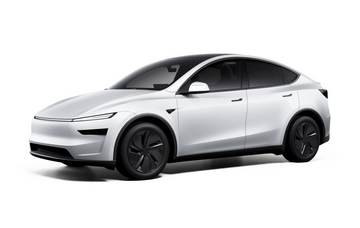
Tesla plans to start the Robotaxi service in Austin with a small fleet of 10 Model Y vehicles, which will operate without safety drivers in the first week. The fleet is expected to gradually grow to 20, 30, 40, and more vehicles, with the goal of reaching 1,000 active Robotaxis within a few months. This cautious introduction prioritizes safety, as Tesla according to Musk "cannot mess up anything." After Austin, Tesla plans an expansion to San Francisco, Los Angeles, and San Antonio. The launch is initially invite-only, meaning only for selected participants, and exclusively uses Tesla-owned vehicles.
Musk emphasized that test vehicles in Austin are already driving around the clock, with safety drivers who, however, "require almost no interventions." This indicates a high level of confidence in the Unsupervised Full Self-Driving (FSD) technology that underlies the Robotaxis.
Teleoperators for maximum safety
To ensure safety, Tesla relies on teleoperators who monitor the vehicles remotely and can intervene in case of problems, such as when a Robotaxi gets stuck at a complex intersection. According to Morgan Stanley analyst Adam Jonas, there will be "many teleoperators" as Tesla does not want to take any risks. Unlike competitors like Waymo, which do not allow direct remote control, Tesla's teleoperators could partially take control, which could, however, limit scalability. Posts on X, like from @cameracoz, emphasize that teleoperators are also standard in other networks, which relativizes the criticism of Tesla's approach.
Geofencing and Avoidance of Complex Intersections
Tesla will geofence the Robotaxis in Austin geofenced operate, which means they only drive in the safest neighborhoods. Musk explained that certain intersections where the system is unreliable are deliberately avoided: "We have the vehicles bypass such intersections or choose routes that avoid them." This is intended to minimize the risk of errors, such as running a red light (as reported in a Business Insider test of FSD). The geofencing is similar to Waymo's approach, which also prioritizes certain areas to increase safety.
Scaling and Future Vision
Tesla's goal is rapid scaling:
- Short-term: From 10 to 1,000 robotaxis in Austin within a few months.
- Mid-term: Expansion to more US cities by the end of 2025, depending on regulatory approvals.
- Long-term: By the end of 2026, Musk forecasts over a million Teslas with Unsupervised FSD in the US, including private vehicles that can join the robotaxi network.
From 2026, Tesla owners will be able to add their cars to the network, similar to an Uber-Airbnb model, where revenue is shared between Tesla and the owners. Musk is convinced that owners could earn more through the network than their leasing costs. On X, @Rjaecker is optimistic: "From 10-20 robotaxis in geofenced areas to 1,000 in several cities in a few months – that's Tesla's plan!"
Vision-Only Approach and FSD Licensing
Musk emphasized Tesla's Vision-Only Strategy, which relies solely on cameras and neural networks. He argued that multiple sensors (like Lidar) cause confusion as they provide conflicting data: "Do you trust the camera or the Lidar?" Tesla's decision to disable radar was not based on cost but on the superiority of cameras in precise AI. This philosophy makes Tesla flexible, as no prior mapping is needed, unlike Waymo. Musk also confirmed talks with major automakers to license FSD, which could further spread the technology.
Challenges and Criticism
Despite the optimism, there are concerns:
-
Safety: The NHTSA is investigating FSD due to collisions in poor visibility, and Tesla has not submitted test data in California since 2019.
-
Teleoperation: Critics like ex-Waymo CEO John Krafcik warn of security risks due to remote control, especially with latency issues.
-
Regulation: Austin has few regulations for autonomous vehicles, which facilitates the launch, but other cities might have stricter rules.
-
Scalability: Posts on X and Forbes articles speculate that too much teleoperation undermines the vision of “Unsupervised FSD” and hinders scaling.
Conclusion: A bold step into the future
Tesla's Robotaxi launch in June 2025 in Austin with 10-20 Model Y vehicles, supported by teleoperators and geofenced areas, is an ambitious endeavor. Avoiding complex intersections and focusing on safety show Tesla's caution, while the vision of 1,000 Robotaxis and a million autonomous Teslas by 2026 underscores the great ambition. For European readers, this is an exciting glimpse into the future of autonomous driving, even if the launch begins in the USA. Stay tuned to see if Tesla fulfills its promises!

Hat dir unser Beitrag gefallen?
Wenn du bereits stolzer Tesla-Fahrer bist oder es zeitnah werden solltest, besuche unseren Onlineshop Shop4Tesla und sichere dir 10% Rabatt auf alle Produkte mit dem Rabattcode: NEWS4TESLA. In unserem umfangreichen Sortiment findest du eine Vielzahl an hochwertigen Tesla-Zubehörteilen für jedes Modell. Entdecke spannende Innovationen und Zubehör, die dein Tesla-Erlebnis noch besser machen - www.shop4tesla.com.