



Tesla has presented its business figures for the fourth quarter of 2024. While the company is struggling with rising costs and tough competition, it is relying on innovations in the field of autonomous driving and robotaxis to change the market in the long term. At the same time, the new US government under Donald Trump could Tesla could pose economic challenges.
Tesla Struggling with falling margins and fierce competition
Tesla reported for the fourth quarter a adjusted profit of 2.6 billion dollars - a solid but not outstanding result. Turnover from the vehicle business fell by 8 percent compared to the same quarter of the previous year to 19.8 billion dollarsas Tesla had to defend market share with increasingly aggressive discounts.
On the other hand, the Energy division made strong gains. Tesla sold battery storage for 3 billion dollarsmore than twice as much as in the same period last year. This shows that Tesla increasingly turning to diversification of revenue sources to cushion declines in the vehicle sector.
From June 2025: first driverless Teslas in Austin
Tesla plans to launch the first driverless Tesla in Austin, Texas, in June 2025. first fully autonomous robotaxi program program from June 2025. Elon Musk announced that the technology will initially be rolled out cautiously before being expanded to a fully autonomous program by the end of 2025. California and other US regions regions by the end of 2025.
The system should be available worldwide by the end of 2026. In future, the self-driving vehicles will be marketed under the name Cybercab will be produced in large numbers. The robotaxi will operate without a steering wheel and pedals, leaving the concept of classic vehicle control behind.
Waymo as a serious competitor
Tesla is not alone with its robotaxi plan. Waymoa subsidiary of Alphabet, already operates a commercial driving service with autonomous cars in cities such as San Francisco, Phoenix and Los Angeles.
Tesla but is betting that its vehicles can be produced more cheaply and will therefore be more suitable for mass production than the currently still cost-intensive Waymo cabs.
Trump as an opportunity and risk for Tesla
Elon Musk is currently one of US President Donald Trump's most important advisors. This could Tesla bring short-term benefits, for example through a faster approval for self-driving vehicles in the USA.
At the same time, however, Trump's policy harbors major risks for Tesla:
- the loss of emissions certificates: Tesla earned in the last quarter alone 692 million dollars from the sale of CO₂ certificates to other car manufacturers. Should Trump lift the strict emissions regulations, this source of income could disappear.
- Reduction in electric car subsidies: Buyers of Tesla-vehicles have so far benefited from up to 7500 dollars in tax breaks - these could be abolished under Trump.
- Higher tariffs on imports: New tariffs on supplier parts from Mexico or Canada could increase production costs for Tesla drive up production costs.
New favorable Tesla-model coming in 2025
In addition to the Robotaxi Cybercab plans Tesla a more affordable electric car that is already in the first half of 2025 is to be produced in the first half of 2025. This model could strengthen Tesla's position in the USA, China and Europe.
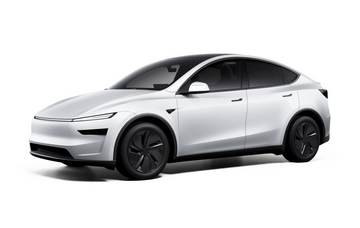
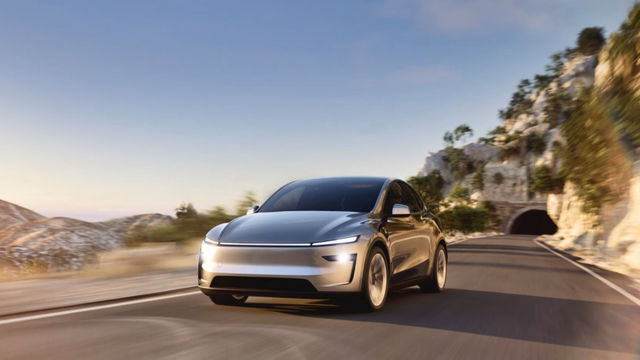
Until then, customers will have to make do with a revised version of the Model Y which will be launched on the market in March 2025.
Conclusion: waiting for the big one Tesla-revolution
Tesla faces a decisive year in 2025. The fierce competition in the electric car industrynew political framework conditions and the introduction of autonomous robotaxis will decide whether Tesla continues to grow or loses market share.
Investors remain optimistic and are betting that Tesla robotaxis, humanoid robots and autonomous mobility will open up new markets in the long term. The coming months will show whether Elon Musk can keep his ambitious promises.

Hat dir unser Beitrag gefallen?
Wenn du bereits stolzer Tesla-Fahrer bist oder es zeitnah werden solltest, besuche unseren Onlineshop Shop4Tesla und sichere dir 10% Rabatt auf alle Produkte mit dem Rabattcode: NEWS4TESLA. In unserem umfangreichen Sortiment findest du eine Vielzahl an hochwertigen Tesla-Zubehörteilen für jedes Modell. Entdecke spannende Innovationen und Zubehör, die dein Tesla-Erlebnis noch besser machen - www.shop4tesla.com.