


A tragic accident involving a Xiaomi SU7 in China has far-reaching consequences: The government is now cracking down hard on misleading advertising claims about autonomous driving. Terms like "Smart Driving" or "Self-Driving" may no longer be used in China in the future – Tesla is also affected. Find out exactly what is changing and what impact this has on the market and technology development here.
Fatal Accident with Xiaomi SU7 as the Trigger
At the end of March, a driver of a Xiaomi SU7 died after the vehicle's assistance system was deactivated shortly before. The car crashed into a concrete barrier at about 97 km/h – resulting in a fire with multiple fatalities.
Although Xiaomi was not officially blamed, an intense debate erupted over the marketing strategies and terms for driver assistance systems. The accusation: The terms suggest a higher level of autonomy than is actually the case.
New Regulations for Advertising and Software Updates
The Chinese Ministry of Industry and Information Technology (MIIT) has now formulated clear rules:
-
Ban on terms like "Smart Driving", "Autonomous Driving" or "Self-Driving" in advertising and communication.
-
In the future, systems may only be referred to as "combined driving assistance" (loosely translated).
-
Over-the-Air Updates (OTA) of driving functions are now subject to strict approval processes – even security updates must be validated.
-
Emergency updates can be considered as recalls or trigger production stops.
The goal: to create clarity for consumers, minimize risks, and promote realistic expectations regarding assistance systems.
Tesla & Co. Under Pressure – Also in China
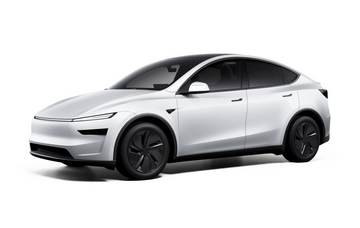
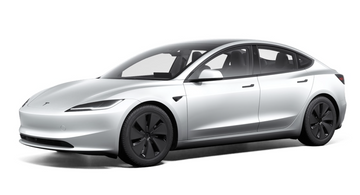
Tesla is also affected by the new regulation. The company had recently its Full Self-Driving (FSD) -System introduced under the new name "Intelligent Assisted Driving" in China - however, the rollout had to be stopped after the MIIT announced stricter guidelines back in February.
In addition to Tesla, BYD, Leapmotor, and Huawei also participated in a meeting with the government. The authorities demanded clear system communication, rigorous tests, and more responsibility in the market introduction of new features.
Innovation meets regulation - what does this mean for the market?
Critics fear that the new regulations could slow down the speed of innovation in the field of autonomous driving. At the same time, there is hope that the new standards will contribute to a consolidation of the overcrowded Chinese car market - and ensure more safety in road traffic in the long term.
For manufacturers, this means:
-
Higher development costs due to additional testing procedures
-
Less leeway in OTA experiments
-
More obligation to inform customers
Yet all of this could ultimately strengthen trust in modern assistance systems - a step that could also set a precedent outside of China.
Conclusion
China pulls the emergency brake: After a tragic accident with a Xiaomi electric car, the country is setting new standards in dealing with driver assistance systems. Terms like "autonomous driving" are henceforth taboo, and updates are being more strictly controlled. Tesla is also affected. Whether this development will slow down innovation or strengthen trust - this is likely to become clear in the coming months

Hat dir unser Beitrag gefallen?
Wenn du bereits stolzer Tesla-Fahrer bist oder es zeitnah werden solltest, besuche unseren Onlineshop Shop4Tesla und sichere dir 10% Rabatt auf alle Produkte mit dem Rabattcode: NEWS4TESLA. In unserem umfangreichen Sortiment findest du eine Vielzahl an hochwertigen Tesla-Zubehörteilen für jedes Modell. Entdecke spannende Innovationen und Zubehör, die dein Tesla-Erlebnis noch besser machen - www.shop4tesla.com.